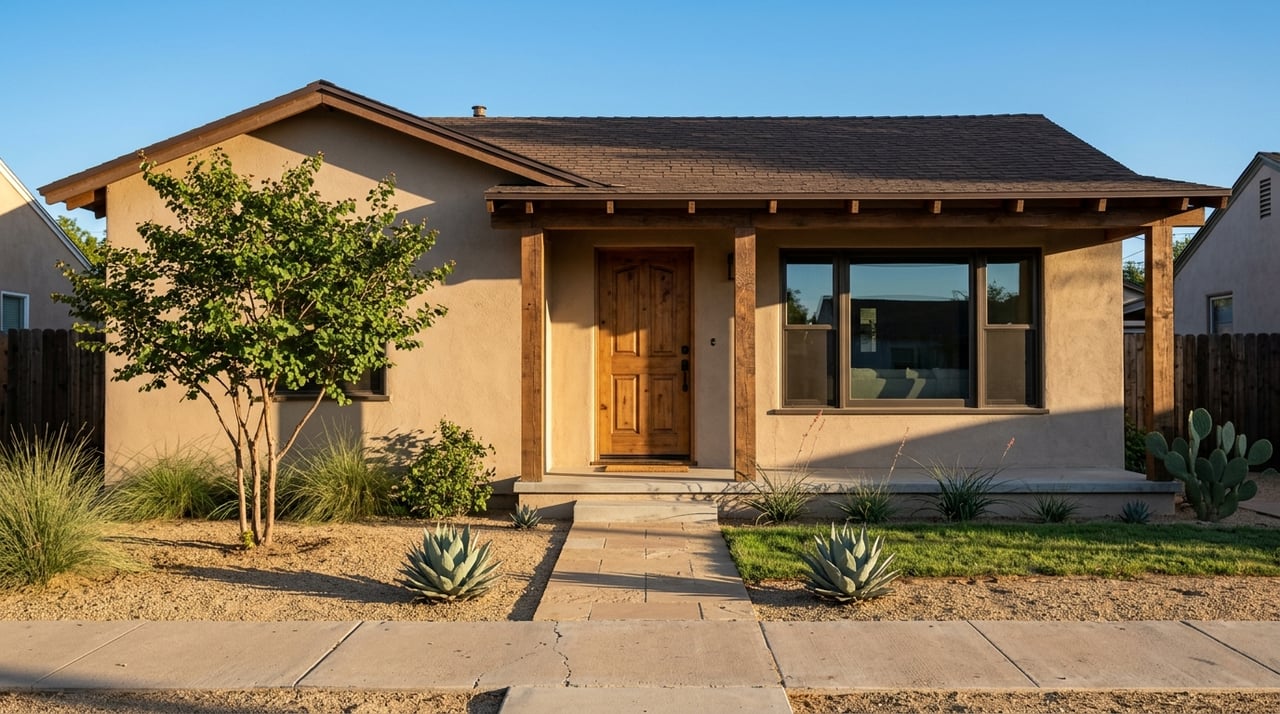
Buying your first home in Albuquerque can feel exciting and overwhelming at the same time. You might love the idea of a charming bungalow, a low-maintenance townhouse, or a newer home with a garage, but it is not always clear which parts of the city line up with those goals. This guide will help you match Albuquerque neighborhood styles to your budget, daily routine, and home preferences so you can search with more confidence. Let’s dive in.
Why neighborhood style matters in Albuquerque
In Albuquerque, your home search often starts with style and lifestyle fit before it starts with a neighborhood name. The city has a historic core, compact Central Avenue districts, newer westside and foothill areas, and valley communities with a more rural feel. That variety gives first-time buyers more options, but it also means two homes at similar price points can offer very different living experiences.
Price is part of that picture. In early 2026, Redfin reported Albuquerque’s median sale price at $354,788 in May, while the Greater Albuquerque Association of REALTORS® reported a Q1 2026 median of $369,000 for single-family detached homes and $260,000 for single-family attached homes. In general, that means attached homes and townhome-style properties often start around the mid-$200,000s, while detached homes often cluster closer to the high-$300,000s.
Albuquerque is also a somewhat competitive market. Redfin reports that homes receive about two offers on average and sell in around 34 days. For you, that means it helps to narrow your search by home style early so you can move quickly when the right property appears.
Historic neighborhoods with character
If you picture original details, mature streetscapes, and early 20th-century architecture, Albuquerque’s historic districts may be the best fit. Areas identified by the City of Albuquerque include Huning Highland, Fourth Ward, Eighth Street/Forrester, Monte Vista & College View, Silver Hill, Spruce Park, and Old Albuquerque.
These neighborhoods offer a wide range of architectural styles. The city’s historic preservation handbook describes homes in Huning Highland as a mix of substantial houses and modest cottages, including early Victorian, period-revival cottages, and California Bungalows. In Fourth Ward, the mix includes Italianate, Queen Anne, Neoclassical, Tudor Revival, Colonial Revival, Mediterranean Revival, and Spanish-Pueblo Revival.
Eighth Street/Forrester is known for smaller cottage-style homes with bungalow, Mission, and Pueblo influences. For a first-time buyer, that can be appealing if you want character in a more modest footprint. These homes can feel very different from newer subdivisions, even when the square footage is similar.
What to know about historic overlays
Historic charm often comes with extra planning. The City of Albuquerque notes that registered historic districts and historic overlay zones may require design review for exterior changes and new construction. In many historic protection overlay zones, most projects require a Certificate of Appropriateness before work begins.
That does not make these homes harder to love. It simply means your search should include questions about renovation plans, maintenance history, and what changes may need city approval. If you are drawn to older homes, this is one of the most important parts of your due diligence.
Old Town has a different feel
Old Town stands apart from Albuquerque’s other historic districts. It is the city’s original neighborhood and historic cultural center, founded in 1706, and Visit Albuquerque describes it as home to more than 100 shops, galleries, boutiques, and restaurants.
For you, that means Old Town can offer period architecture and a distinctly historic setting, but the feel is more historic-commercial than purely residential. If you want old-home character with a quieter bungalow-district pattern, you may prefer to compare Old Town with nearby historic neighborhoods before deciding.
Central neighborhoods for attached homes
If you want a condo, townhouse, or another lower-maintenance option, central Albuquerque is often the place to focus. Stronger concentrations of attached housing are typically found near Downtown, Nob Hill, Midtown/University, Uptown, and the Central/Highland/Upper Nob Hill corridor.
These areas tend to attract buyers who care more about access and convenience than maximum square footage. The City’s redevelopment plan for Central/Highland/Upper Nob Hill highlights pedestrian-oriented residential and commercial uses, more residential density along Central Avenue, and transportation choices that include transit, walking, biking, and driving.
That makes this part of the city a smart place to start if you want a more urban feel. You may find smaller homes, infill properties, or attached housing that trades lot size for location and daily convenience.
Why Nob Hill feels different
Nob Hill often appeals to first-time buyers who want neighborhood character without a suburban layout. Visit Albuquerque describes it as a compact, highly walkable district with Route 66 architecture, local shops, and student-oriented activity. Because it spans a mile-long stretch of Central Avenue just east of UNM, it often feels more like a small urban district than a large residential neighborhood.
That style is not for everyone, and that is the point. If you want a quieter street pattern or a larger yard, other parts of Albuquerque may be a better fit. But if you value nearby restaurants, local businesses, and a denser street grid, Nob Hill can be worth a close look.
Transit access along Central Avenue
The Central corridor also offers Albuquerque’s strongest transit spine. ABQ RIDE is a zero-fare system, and ART runs along Central Avenue from the Central & Unser Transit Center through Downtown and Nob Hill to the Uptown Transit Center and east to Tramway. ART stations are spaced about every half mile, with buses arriving roughly every 20 to 30 minutes.
A city transit analysis using 2020 worker data found that the Central Avenue ART corridor had higher transit, walking, and biking shares than the rest of Albuquerque. For first-time buyers, that helps explain why compact attached homes and small-lot infill are more common in this area. If your daily routine could benefit from stronger transit access, this style of neighborhood may be a great match.
Newer subdivisions and suburban patterns
If your wish list includes newer construction, a larger floor plan, a garage, or a more conventional subdivision layout, you will likely spend more time looking at the Westside, the Eastside foothills, and the Balloon Fiesta Park/North I-25 area. Visit Albuquerque describes the Westside as a fast-growing area and the Eastside as the foothills of the Sandia Mountains.
These descriptions do not mean every home in those areas is new. They do, however, help explain why these parts of the city often feel more auto-oriented and suburban than the historic core or the Central corridor. For many first-time buyers, that tradeoff is worth it for more interior space or newer systems.
This style of neighborhood can be especially useful if you want a simpler maintenance picture. Compared with many older homes, newer properties may offer more updated layouts and features, though every home should still be evaluated on its own condition and location.
Think about your daily route
When you compare central and outer areas, commute patterns matter. Visit Albuquerque lists Nob Hill about 4.1 miles from the airport, North Valley at 9.5 miles, Eastside at 13 miles, and Westside at 17.2 miles. That does not tell you exact drive times, but it does show how much daily routing can vary across the city.
For broader context, the Albuquerque Regional Economic Alliance and CBRE reported a 24.2-minute average commute time for the greater Albuquerque region in 2024. That figure is regional, not neighborhood-specific, but it is useful when deciding whether you want a central location with a smaller home or a farther-out location with more space.
Valley areas with a rural feel
If you want room to breathe without leaving the metro, Albuquerque’s valley communities deserve a look. Visit Albuquerque describes the North Valley as a place with agricultural roots, green pastures, orchards, wineries, and ongoing efforts to preserve rural heritage.
This style of neighborhood can feel very different from both the Central corridor and the suburban edges of the city. You may be drawn to larger lots, a slower pace, or a setting that feels less dense. For some first-time buyers, that tradeoff is worth a longer drive or a different housing inventory mix.
Nearby communities like Los Ranchos and Corrales are often part of this same style conversation. If your priorities include lot size, privacy, or a more rural atmosphere, these areas can help you refine what “fit” really means for your first home.
A smart first-time buyer checklist
In Albuquerque, the best neighborhood search usually starts with a few practical filters. Rather than looking everywhere at once, it helps to sort homes by built form, location pattern, and long-term upkeep.
Here are some of the most useful filters to use early in your search:
- Detached home vs. attached home
- Historic overlay status
- Lot size and outdoor space
- Age and condition of major systems
- Access to Central Avenue and ART
- Need for a car-oriented commute route
The City of Albuquerque also changed zoning in 2023 to allow casitas in R-1 neighborhoods throughout Albuquerque. If you are thinking long term, that may matter when you compare lot flexibility or future use options. It is another reason to look beyond finishes and think carefully about how a property could support your needs over time.
How to choose the right style for you
The best Albuquerque neighborhood for a first-time buyer is not the one with the most buzz. It is the one that fits your budget, your routine, and the kind of homeownership experience you want. A bungalow in a historic district, a townhouse near Central, a newer home on the Westside, and a rural-feeling property in the valley can all be good choices for different reasons.
If you start by asking how you want to live day to day, your search becomes much easier. Do you want charm and history, easy transit access, more square footage, or a slower pace with more land? Once you answer that question, the right Albuquerque neighborhood style usually starts to come into focus.
When you are ready to compare Albuquerque neighborhoods with a calm, local perspective, April Rodas can help you narrow your options and find the right fit for your first home.
FAQs
What neighborhood styles are common for first-time homebuyers in Albuquerque?
- First-time buyers in Albuquerque often compare historic neighborhoods with bungalows and cottages, central areas with condos and townhomes, newer suburban-style areas with larger homes, and valley communities with a more rural feel.
What parts of Albuquerque are best for attached homes and townhouses?
- Attached homes are often concentrated near Downtown, Nob Hill, Midtown/University, Uptown, and the Central/Highland/Upper Nob Hill corridor, where housing tends to be denser and more pedestrian-oriented.
What should first-time buyers know about historic homes in Albuquerque?
- Many historic districts and overlay zones in Albuquerque may require design review for exterior changes, and many projects need a Certificate of Appropriateness before work begins.
How does transit affect neighborhood choice in Albuquerque?
- Transit access is strongest along Central Avenue, where ABQ RIDE and ART provide zero-fare service, so buyers who value bus access, walkability, or biking often focus on the Central corridor.
Are newer homes easier to find in certain parts of Albuquerque?
- Buyers looking for newer construction, garages, and more suburban layouts often focus on the Westside, Eastside foothills, and the Balloon Fiesta Park/North I-25 area.
What price range should first-time buyers expect in Albuquerque?
- In early 2026, citywide median price benchmarks were in the mid-$300,000s overall, with GAAR reporting $369,000 for single-family detached homes and $260,000 for single-family attached homes in Q1 2026.